Showing posts with label Earthsure gardening. Show all posts
Showing posts with label Earthsure gardening. Show all posts
Thursday, July 7, 2011
A nice video from the 80's on gardening with a calm Canadian.
http://www.nfb.ca/film/my_urban_garden

Monday, July 4, 2011

Sunday, June 26, 2011
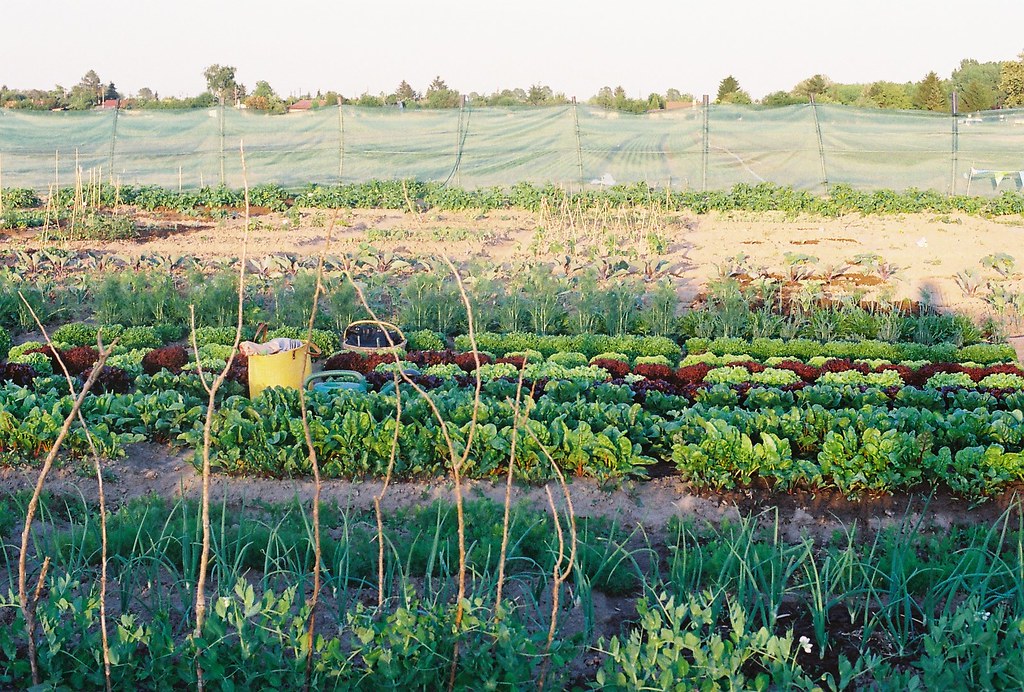
Saturday, June 25, 2011
new concept: Dynamic Accumulators
We've all heard about the nitrogen fixing powers of our legume friends. This was a miracle concept--a plant that harvests nutrients from the dirt and air so other plants can use it? Nuh uh. Well, maybe there's one family of plants that does that, but more? Yes, there are other plants that are good at making more nutrients available in the soil. Their name: dynamic accumulators. wow
Friday, June 24, 2011

Thursday, February 24, 2011
Sunday, November 28, 2010

Sunday, November 21, 2010

September is the time to sow the winter greens
A special article
By Barbara Damrosch
Special to The Washington Post
Thursday, September 2, 2010
The first autumn leaf may not yet have fallen, but never mind that. It's time to consider the first winter leaf on your plate. Winter fare may seem far in the future, but September is planting time.
Winter greens take many forms. In southern France they're big, blanched heads of endive and escarole. In our household the winter treat is a cold-weather baby leaf salad. Like the week-old mix in plastic bags, in the store? No: fresh, lively basketfuls with a sweet, springlike flavor, brought in from the cold and rinsed in the sink. There's no comparison.
Many greens might love your winter garden, but for ease and infallibility here are the Big Six.
Lettuce. Like most winter salad crops, lettuce is hardier when grown not as heads but in closely sown rows, cut at about three inches tall with a small serrated knife. Find the hardiest varieties among the oak leaf types, and romaines such as Rouge d'Hiver and Winter Density. Sown in a cold frame, they'll regrow for a second and third helping.
Spinach. Bursting with folate, calcium, iron and even some protein, spinach is the ultimate winter tonic. Sown in rows eight inches apart, plants spaced four inches apart in the row, it may need no protection at all. Pick the outer leaves first.
Arugula. Not the biting, bolting, flea-beetle-ridden arugula of summer, but the bright-green, mild arugula of short, crisp days.
Tatsoi. Most Asian greens thrive in winter, but tatsoi is my first choice. Sow it like spinach and pick at baby size, or space more widely and allow large, flat rosettes to grow. Either way it's mild and delicious, raw or cooked.
Mache. This European green forms tiny rosette-shaped heads. Cut them whole, with a serrated knife at soil level, then wash thoroughly and toss whole into salads. Soft and succulent, it's the queen of winter greens. When there is a gap in the garden, cold frame or greenhouse, sow mache.
Claytonia. Oddly enough, the least familiar one of all is an American native plant. Small, round leaves on slender stems are so light, they float when you wash them. Extremely hardy, they can be cut and recut until spring, when they bloom and go to seed. Allow this to happen and they will germinate the following fall for a volunteer crop.
To make this a Sweet 16, you might add to the list Swiss chard, frise endive, mizuna, bok choy, land cress, parsley, chervil, mustard greens, beet greens and kale, all picked small. Because they come from a variety of plant families, each has its own set of nutrients. Together, they're a multivitamin in a bowl. But yummy. Bon appetit.
Damrosch is a freelance writer and the author of "The Garden Primer."----which I am currently reading!
By Barbara Damrosch
Special to The Washington Post
Thursday, September 2, 2010
The first autumn leaf may not yet have fallen, but never mind that. It's time to consider the first winter leaf on your plate. Winter fare may seem far in the future, but September is planting time.
Winter greens take many forms. In southern France they're big, blanched heads of endive and escarole. In our household the winter treat is a cold-weather baby leaf salad. Like the week-old mix in plastic bags, in the store? No: fresh, lively basketfuls with a sweet, springlike flavor, brought in from the cold and rinsed in the sink. There's no comparison.
Many greens might love your winter garden, but for ease and infallibility here are the Big Six.
Lettuce. Like most winter salad crops, lettuce is hardier when grown not as heads but in closely sown rows, cut at about three inches tall with a small serrated knife. Find the hardiest varieties among the oak leaf types, and romaines such as Rouge d'Hiver and Winter Density. Sown in a cold frame, they'll regrow for a second and third helping.
Spinach. Bursting with folate, calcium, iron and even some protein, spinach is the ultimate winter tonic. Sown in rows eight inches apart, plants spaced four inches apart in the row, it may need no protection at all. Pick the outer leaves first.
Arugula. Not the biting, bolting, flea-beetle-ridden arugula of summer, but the bright-green, mild arugula of short, crisp days.
Tatsoi. Most Asian greens thrive in winter, but tatsoi is my first choice. Sow it like spinach and pick at baby size, or space more widely and allow large, flat rosettes to grow. Either way it's mild and delicious, raw or cooked.
Mache. This European green forms tiny rosette-shaped heads. Cut them whole, with a serrated knife at soil level, then wash thoroughly and toss whole into salads. Soft and succulent, it's the queen of winter greens. When there is a gap in the garden, cold frame or greenhouse, sow mache.
Claytonia. Oddly enough, the least familiar one of all is an American native plant. Small, round leaves on slender stems are so light, they float when you wash them. Extremely hardy, they can be cut and recut until spring, when they bloom and go to seed. Allow this to happen and they will germinate the following fall for a volunteer crop.
To make this a Sweet 16, you might add to the list Swiss chard, frise endive, mizuna, bok choy, land cress, parsley, chervil, mustard greens, beet greens and kale, all picked small. Because they come from a variety of plant families, each has its own set of nutrients. Together, they're a multivitamin in a bowl. But yummy. Bon appetit.
Damrosch is a freelance writer and the author of "The Garden Primer."----which I am currently reading!
Educational Agriculture By Eliot Coleman
“Soil is the tablecloth under the banquet of civilization.” - Steven Stoll
Someday in the future, when advances in understanding have made small-scale agriculture truly financially viable, I want to recreate that famous scene in The Graduate. I want to walk up to some well-educated young person and tell them I have only one word to say – farming. But I am afraid that the ability to make a good living from farming will not be a sufficient inducement. There is another barrier. Today it is considered somehow unworthy of educated people to involve themselves in food production – to work with their hands in the soil like lesser mortals.
Modern education has been too easily swayed by the spectacular and the industrial while ignoring the fundamental and the biological. Schools and colleges spend millions to familiarize students with Internet systems in the ether above their heads, while nothing is spent to introduce them to the vital systems in the earth beneath their feet. We impress students with the spectacle of millions of stars in the heavens, but neglect to awe them with the miracle of millions of living organisms in a single teaspoon of fertile soil. We introduce them to the chemical table of elements but leave them unaware of the susceptibility of the creatures in that teaspoon to the daily chemical residues of our industrial production. How can we hope to train students to care for the planet when they are unfamiliar with the irreplaceable role of the skin of that planet in the miracle of their life?
Our educators are doing a reasonable job at explaining the intricacies of human society to students in lab and classroom, but they are neglecting to make them aware of the web of life in field and garden. If we wish to teach reverence for the earth, we need to insist that practical time spent on the soils of a farm is just as valuable in training citizens for an informed life in the 21st century as time spent studying chalk-filled blackboards in the academy's lecture halls.
Education's dismissal of agriculture's ability to teach us about life has historical background. For much of the past, for many people, farming was devoid of anything but incessant toil and illiterate neighbors. That impression of farming has persisted to the present day. But advances in biology since the 1850s (which unfortunately in the public mind have been overshadowed by the propaganda of the chemical bandwagon) have unlocked mysteries that make today's organic farming as intellectually stimulating as any other profession. The interrelated activities described by soil microbiology, nitrogen fixation, symbiotic relationships, mychorrizal associations, allelopathy, weed ecology, and systemic acquired resistance have helped contemporary farmers appreciate the intuitive brilliance of age-old practices like crop rotations, green manures, mixed stocking, and compost making.
When food production is considered a lowly activity, something for the unschooled, the result is forfeit for all – the forfeit of humanity's essential connection to the source of life. By choosing not to educate our children about soil and agriculture and food, our society in general, and more important, our institutions of higher learning, deprive today's young people of a truly valuable education. The generations to come will remain ignorant of that thin layer of fertile soil upon which their survival depends.
What better medium than a compost heap for students to come face-to-face with life, death, and the processes that keep our planet alive? If we expect today's students to find solutions to ensure the future of their world, which they will need to do, what could be better than the direct knowledge that compost – the world's best fertilizer, made for free in your back yard from kitchen and farm animal waste products – is a model for other simple and inexpensive solutions? We have a belief on our farm that if what we are doing is in any way complicated it is probably wrong, and we modify our practices accordingly. Biologically based agriculture is not only a subject. It is a teacher.
In 1800, Erasmus Darwin, Charles Darwin's grandfather, wrote that although chemistry and physics could be considered as having achieved the status of sciences, agriculture remained an art. I think that is still true today. This art involves subtleties and judgment calls such as adding just enough limestone but not too much (and whether calcitic or dolomitic), finding the proper depth of tillage (if you till at all), figuring out the ideal balance of ingredients (fungal or bacterial) in the compost, knowing the optimum humification of compost for each use, managing green manures as either surface or incorporated amendments, maximizing the use of “inputs” that spring from natural processes on the farm itself, involving one's mind in all aspects of the biological world of the soil.
None of the above is dull or unskilled. Balancing these factors is fascinating, challenging, and inspiring, since skill grows with practice.
The results of an intimate, caring, and alert involvement with soil and food-growing are vigorous, healthy plants and animals, a clean environment, and the inward satisfaction of participating in a truly sustainable agriculture that can feed the human population in perpetuity.
Such work cannot continue to be considered beneath the dignity of the educated.
from http://www.vtcommons.org/journal/2007/05/eliot-coleman-educational-agriculture
Someday in the future, when advances in understanding have made small-scale agriculture truly financially viable, I want to recreate that famous scene in The Graduate. I want to walk up to some well-educated young person and tell them I have only one word to say – farming. But I am afraid that the ability to make a good living from farming will not be a sufficient inducement. There is another barrier. Today it is considered somehow unworthy of educated people to involve themselves in food production – to work with their hands in the soil like lesser mortals.
Modern education has been too easily swayed by the spectacular and the industrial while ignoring the fundamental and the biological. Schools and colleges spend millions to familiarize students with Internet systems in the ether above their heads, while nothing is spent to introduce them to the vital systems in the earth beneath their feet. We impress students with the spectacle of millions of stars in the heavens, but neglect to awe them with the miracle of millions of living organisms in a single teaspoon of fertile soil. We introduce them to the chemical table of elements but leave them unaware of the susceptibility of the creatures in that teaspoon to the daily chemical residues of our industrial production. How can we hope to train students to care for the planet when they are unfamiliar with the irreplaceable role of the skin of that planet in the miracle of their life?
Our educators are doing a reasonable job at explaining the intricacies of human society to students in lab and classroom, but they are neglecting to make them aware of the web of life in field and garden. If we wish to teach reverence for the earth, we need to insist that practical time spent on the soils of a farm is just as valuable in training citizens for an informed life in the 21st century as time spent studying chalk-filled blackboards in the academy's lecture halls.
Education's dismissal of agriculture's ability to teach us about life has historical background. For much of the past, for many people, farming was devoid of anything but incessant toil and illiterate neighbors. That impression of farming has persisted to the present day. But advances in biology since the 1850s (which unfortunately in the public mind have been overshadowed by the propaganda of the chemical bandwagon) have unlocked mysteries that make today's organic farming as intellectually stimulating as any other profession. The interrelated activities described by soil microbiology, nitrogen fixation, symbiotic relationships, mychorrizal associations, allelopathy, weed ecology, and systemic acquired resistance have helped contemporary farmers appreciate the intuitive brilliance of age-old practices like crop rotations, green manures, mixed stocking, and compost making.
When food production is considered a lowly activity, something for the unschooled, the result is forfeit for all – the forfeit of humanity's essential connection to the source of life. By choosing not to educate our children about soil and agriculture and food, our society in general, and more important, our institutions of higher learning, deprive today's young people of a truly valuable education. The generations to come will remain ignorant of that thin layer of fertile soil upon which their survival depends.
What better medium than a compost heap for students to come face-to-face with life, death, and the processes that keep our planet alive? If we expect today's students to find solutions to ensure the future of their world, which they will need to do, what could be better than the direct knowledge that compost – the world's best fertilizer, made for free in your back yard from kitchen and farm animal waste products – is a model for other simple and inexpensive solutions? We have a belief on our farm that if what we are doing is in any way complicated it is probably wrong, and we modify our practices accordingly. Biologically based agriculture is not only a subject. It is a teacher.
In 1800, Erasmus Darwin, Charles Darwin's grandfather, wrote that although chemistry and physics could be considered as having achieved the status of sciences, agriculture remained an art. I think that is still true today. This art involves subtleties and judgment calls such as adding just enough limestone but not too much (and whether calcitic or dolomitic), finding the proper depth of tillage (if you till at all), figuring out the ideal balance of ingredients (fungal or bacterial) in the compost, knowing the optimum humification of compost for each use, managing green manures as either surface or incorporated amendments, maximizing the use of “inputs” that spring from natural processes on the farm itself, involving one's mind in all aspects of the biological world of the soil.
None of the above is dull or unskilled. Balancing these factors is fascinating, challenging, and inspiring, since skill grows with practice.
The results of an intimate, caring, and alert involvement with soil and food-growing are vigorous, healthy plants and animals, a clean environment, and the inward satisfaction of participating in a truly sustainable agriculture that can feed the human population in perpetuity.
Such work cannot continue to be considered beneath the dignity of the educated.
from http://www.vtcommons.org/journal/2007/05/eliot-coleman-educational-agriculture
Monday, October 25, 2010

Sunday, October 24, 2010

Sunday, October 10, 2010

Saturday, October 9, 2010

Saturday, July 31, 2010
Washer to Watering Can
A link for turning your washer into a graywater system
http://www.oasisdesign.net/greywater/laundry/index.php
http://www.oasisdesign.net/greywater/laundry/index.php
Subscribe to:
Posts (Atom)